Love in the Time of Infinite Choice
Desire, dating algorithms, and the impossibility of choosing
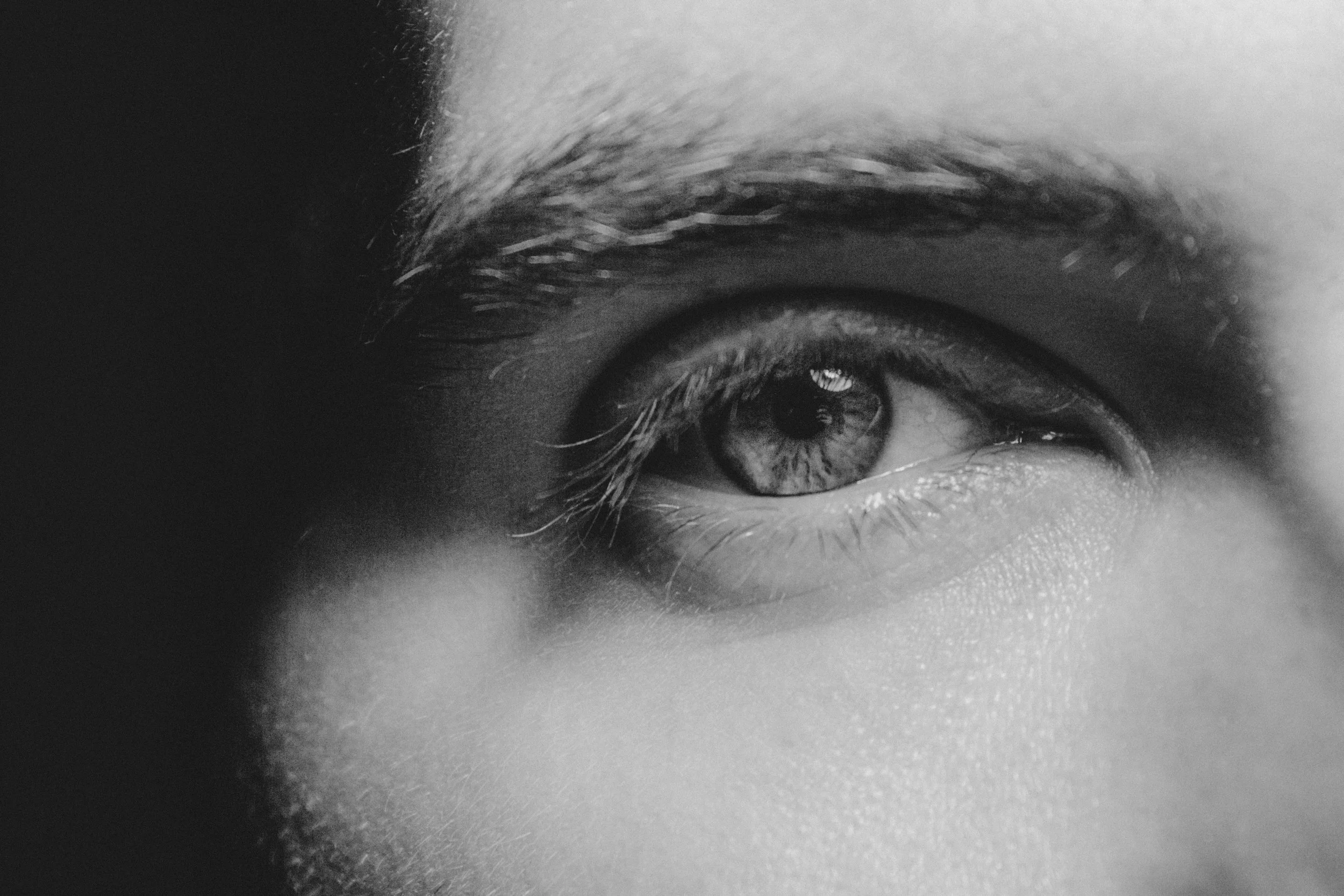
Photo by Sam Badmaeva on Unsplash
Nikos Marinos · Paris · 2025
"
“To choose is to kill all that you have not chosen."
André Gide
He is not in crisis. That is the first thing to establish, because people in this kind of difficulty often aren't, and the absence of crisis makes the difficulty harder to name. Thomas — thirty-eight, a documentary filmmaker, Parisian by birth and temperament — came to therapy at the suggestion of a friend who thought talking to someone might help. Help with what, exactly, was harder to say. His relationship was going well. His work was going well. He was not depressed, not anxious in any diagnosable sense, not presenting the symptoms that announce themselves clearly enough to make the work feel straightforward. He was, in a word he used himself with some embarrassment, unsettled. And the unsettledness had been there for so long that he had begun to wonder if it was simply who he was — a man constitutionally unable to arrive, to be where he was without some part of him remaining elsewhere, attending to possibilities he couldn't name and couldn't quite relinquish.
He had been with Camille for eight months. Eight months of what he described as genuine warmth, shared humour, the particular ease of being with someone who does not require you to perform. They slept well together. She met his friends and his friends liked her. He liked her. He was possibly in love with her, though the possibly sat in his sentences with a weight he could not account for. And yet, three weeks before we first met, he had spent an evening scrolling through the profile of a woman he had matched with two years ago and never actually met. Not because he wanted her — he wasn't sure he would recognise her on the street. But because he needed, he said, to check something. He couldn't explain what. The checking had given him no satisfaction and no peace and he had closed the application with a feeling he described as shame, though not quite shame either — something adjacent to it, something that didn't have an available name.
I thought: this man is not having an affair. He is having a relationship with the structure of infinite choice itself. And the structure, it turns out, is its own kind of infidelity.
· · ·
The architecture of contemporary dating — the swipeable marketplace, the ranked profiles, the quantified compatibility — is so familiar by now that its strangeness has become invisible. We have adapted to it with the speed that human beings adapt to most things: quickly enough to function, not quickly enough to understand what the adaptation costs. What it offers is genuinely extraordinary. The breakdown of geography as a constraint on love. Access across class, across neighbourhood, across the invisible social boundaries that once determined, with considerable efficiency, who you would ever meet. The possibility, for people whose desires do not conform to social convention, of finding someone without the years of concealment that once preceded that finding. These are not small things. They are, for many people, life-altering things. I do not want to write as though the algorithm is simply a villain in a story about how we have lost the art of love. It is not simply a villain. It is something more complicated and, in its complications, more instructive.
What it has also done — and this is the thing I find myself thinking about clinically — is alter the structure of desire itself. Not its content; the content of desire has always been varied, excessive, surprising, often at odds with what people consciously want. The structure. The conditions under which desire forms, moves, and either deepens or dissipates. And the structural change is this: for the first time in human history, the alternatives are not merely imaginable. They are visible. They are quantified. They are, at least in principle, available. Every relationship now exists against a backdrop of a theoretically infinite supply of other possible relationships, and this backdrop does not recede when you close the application. It has become a permanent feature of the psychic landscape.
For the first time in human history, the alternatives are not merely imaginable. They are visible. They are quantified. They are, at least in principle, available.
The old anxiety about love — the anxiety that belongs to scarcity, to the fear of never finding anyone, to the loneliness that precedes connection — is a known anxiety. It has its own literature, its own clinical presentation, its own therapeutic direction. The new anxiety is less familiar and harder to treat, because it doesn't announce itself as anxiety. It announces itself as reasonable caution. As not settling. As maintaining one's standards. The person experiencing it does not feel that something is wrong with them. They feel, rather, that they are doing the sensible thing — holding their options open, waiting for certainty, refusing to commit to something good when something better might exist. And since something better, in an infinite-choice environment, might always exist, the waiting is structurally without end.
· · ·
There is a line in psychoanalytic thinking — I can't pin it to one source, it belongs to the general climate of relational thought — that desire is not the desire for satisfaction. It is the desire to desire. What we want, at some level below the level of what we consciously want, is not the end of wanting. We want the wanting to continue, because the wanting is itself a form of aliveness that satisfaction threatens to foreclose. This is why, as Lacan observed with characteristic dryness, the arrival of the desired object is so often accompanied by disappointment. Not because the object is wrong, but because its arrival brings desire to rest. And desire at rest is not quite desire anymore. It is something calmer, more domestic, more sustainable — and also, for some people, slightly mortifying.
The algorithm has not created this dynamic. Desire's relationship to its own perpetuation is ancient, clinical, endlessly documented. What the algorithm has done is provide it with an infrastructure. It has given the anxiety about satisfaction — the fear that choosing means foreclosing — a legitimate technological home. You are not, after all, being irrational when you continue to look. The looking is built into the system. The system is designed, quite explicitly, to keep you looking. Its commercial logic depends on the continuity of your desire and is structurally indifferent to your happiness. A platform whose users found what they were looking for and stopped using it would not survive as a business. The incentive is not your arrival but your perpetual motion.
Thomas understood this intellectually. He had, in fact, read about it — the persuasion design, the variable reward schedules borrowed from slot machine psychology, the way the interface is calibrated to the precise threshold of stimulation that keeps attention engaged without producing satisfaction. He knew it. He still scrolled. This is the thing about structural forces that have been successfully internalised: knowledge of the structure does not automatically confer freedom from it. You can understand, fully and articulately, that you are in a trap, and still be in the trap. Sometimes the understanding even becomes another way of staying — another form of engagement, however critical, with the very thing you are trying to disengage from.
· · ·
The question I found myself returning to, sitting with Thomas across a number of months, was not the question he brought: whether Camille was the right person. He was asking that question with the wrong instrument. The right instrument for evaluating a person is time spent with that person — time, and presence, and the accumulation of ordinary experience that makes someone specific to you rather than generically compatible. The algorithm's instrument — the profile, the photograph, the summary self — is designed for a different evaluation entirely. It is designed for sorting, for the rapid elimination of obvious incompatibility, and it is very good at that. It is not designed for the question of whether someone is the right person, because that question is not answerable at the level of the profile. It is answerable, if it is answerable at all, only through the long, inconvenient, unrepeatable process of actually being with someone.
The category confusion — using the algorithm's logic to evaluate something the algorithm's logic cannot reach — is not a personal failing of Thomas's. It is a consequence of having spent years inside an architecture that trains you to sort. You become, gradually and without noticing, an expert sorter. You develop, quite genuinely, finely calibrated responses to information about people — their photographs, their stated values, their age and profession and apparent aesthetic. You become skilled at quickly assessing whether someone is worth pursuing. And then you are inside a relationship with someone you have already assessed and found worth pursuing, and you find that the sorting instinct does not switch off. It is looking for evidence that the assessment was correct. Or for evidence that it wasn't. The evidence it finds is the evidence it was designed to find: information that could support revision of the decision.
I want to be precise about what I am not saying here. I am not saying that uncertainty about a relationship is always misguided, or that doubts should be suppressed in the service of commitment. Relationships fail. People are genuinely wrong for each other in ways that take time to become visible. Doubt is sometimes accurate. What I am trying to describe is something more specific: a condition in which doubt is not a signal from the relationship but a habit of mind imported from a context in which doubt was always appropriate. A context in which the correct response to any option was to keep looking.
· · ·
There is something philosophers call opportunity cost, and something the rest of us experience as grief. To choose one thing is to unchoose everything else. This has always been the case — the philosopher who formulates it and the person who lies awake at thirty-eight wondering about the road not taken are responding to the same condition of human life, which is that we are finite and time is linear and what we choose we choose at the expense of what we do not. Every life is a series of closed doors. Every committed love is the closing of doors that were, at the moment of commitment, still open.
What is new — genuinely new, not merely felt as new — is that the closed doors are now visible. They are not behind you; they are in your pocket, glowing softly, available for consultation at any hour. The woman you might have loved instead is eight miles away and has updated her profile recently and is looking for someone like you. You know this not as an abstraction but as a specific, geographical, photographic fact. The alternative lives you might have lived are not memories or imaginings; they are profiles. They are data. They have been fed into a system that has evaluated them against your stated preferences and found them compatible.
This, I think, is what has changed the phenomenology of choosing. Not the fact of alternatives — alternatives have always existed — but the fact that alternatives are now curated and presented as a personalised feed of your own unlived life. And this changes the psychology of commitment from a single act of will into something that must be continually renewed against a continually updated counter-argument. You are not choosing once. You are choosing against the algorithm, again and again, in every moment when you could be looking but are instead here, with this particular person, attending to the specific and unrepeatable texture of a life you are actually living.
You are not choosing once. You are choosing against the algorithm, again and again, in every moment when you could be looking but are instead here.
· · ·
Several months into our work together, Thomas said something I have thought about since. He said that he had been working on a film about a village in the Corrèze — a place where, for generations, marriage had been largely a matter of proximity and social expectation, where people had loved the people they were near because those were the people available. He found this, he said, both terrible and slightly enviable. Terrible for the obvious reasons: the constrained lives, the suppressed desires, the people who spent decades with someone fundamentally wrong for them because there was, quite literally, no one else in the valley. Enviable for a reason he was embarrassed to articulate: because those people, he said, never had to decide. The decision was made for them by geography, by family, by the social structures that preceded their desire and shaped it before it had a chance to want otherwise.
I didn't dismiss this. It would have been easy to point out the cost of those constraints — and the cost was real, and I didn't minimise it. But there was something in what he said that deserved to be taken seriously, something that was not nostalgia for limitation but a perception, however uncomfortable, about what choosing requires. Choosing requires an agent. It requires a self that is stable enough, defined enough, to know what it is choosing and why. And it requires the willingness to let the choice matter — to let the closing of the other doors be a real closing, to let the person you are choosing be chosen, which means being seen and held and valued not as the best option currently available but as the person you are choosing to be defined by.
That last formulation matters. Being defined by another person — having your life shaped by the fact of this particular love — is what serious commitment involves. And the algorithm is, among other things, a machine for resisting definition. It keeps you in a state of potential. It offers the self as something always still being designed, always subject to revision, always open to the better option that might arrive with the next notification. The self that forms inside this architecture is a self that is deeply reluctant to close. And a self reluctant to close is a self that cannot fully love, because love — the kind that accumulates, that weathers difficulty, that becomes the ground of a shared life rather than a temporary arrangement of mutual convenience — requires exactly the willingness that the algorithm trains you to resist.
· · ·
I am aware, writing this, of the objection that arrives here. That I am describing a problem particular to a certain class of person in a certain kind of city — educated, mobile, economically comfortable, with enough time and self-consciousness to turn a swiping habit into a clinical presentation. That for many people the algorithm is simply a practical tool, used without existential drama to find someone to have dinner with. That the anguish I am describing is a luxury. The objection is partly true. The phenomenology I have described is not universal, and I want to resist the error of making a private difficulty into a civilisational condition.
But only partly. The structural change — the permanent visibility of alternatives, the training of desire toward perpetual motion, the reshaping of commitment from an act into a continuous performance against counter-pressure — is not a luxury problem. It is a widespread consequence of an architecture that hundreds of millions of people now inhabit for years at a time during the period of life when the capacity for love is being formed and practised. The particular acuity of the suffering may vary. The underlying condition — desire that has been organised by systems designed to prevent its satisfaction — is, I think, considerably more general.
Thomas stopped using the applications. Not because I suggested it, not as a therapeutic intervention — he simply arrived one week and mentioned it without ceremony, the way people mention things that have stopped being interesting. He was still unsettled, still occasionally haunted by the feeling that something was missing, still not entirely certain about Camille. But the uncertainty had shifted slightly in quality. It had become less like the output of a search and more like the ordinary human condition of not knowing what the future holds. Which is, in the end, the condition of all love. The algorithm had not introduced that uncertainty. It had disguised it as a solvable problem. What Thomas was discovering, slowly, was that the problem is not solvable — and that this is not a defect in the arrangement but its essential nature.
To choose someone is to step out of the market. Not to deny that the market exists, not to pretend that other people do not, but to make a particular kind of decision: that this person, with their specific history and their specific flaws and their specific way of laughing at things you also find funny, is the one you are going to turn toward. Not because they are optimal. Not because the algorithm confirmed it. But because choosing is itself a form of love — perhaps the form that makes all other forms possible — and because the only alternative to choosing, in the end, is the permanent, weightless, exhausting freedom of never having arrived anywhere at all.
From Designing a Self — a series by Nikos Marinos
Paris · 2025
